Do Preschool Movement Classes Really Help? What the Research Says
Updated November 17, 2026 · By the Stretch-N-Grow of Greater San Antonio team
Parents ask us all the time: is a weekly fitness, dance or music class at preschool really doing anything, or is it just fun? Fair question! The good news is that researchers have studied exactly this, and the answer is yes: movement classes for preschoolers help kids build motor skills, self-control and social skills, especially when the classes are coach-led, game-based and happen week after week. Here’s what the research says, in plain words.
The quick answer
- Motor skills: structured, coach-led practice builds running, jumping, throwing and catching skills faster than free play alone.
- Focus and self-control: active games improve the “thinking skills” kids use to pay attention, wait their turn and follow directions.
- Social skills: designed group activities help preschoolers share, cooperate and get along.
- Consistency matters: programs that run 12 weeks or longer show the biggest gains.
The CDC says children ages 3 to 5 should be physically active throughout the day for growth and development.
What the experts say about movement classes for preschoolers
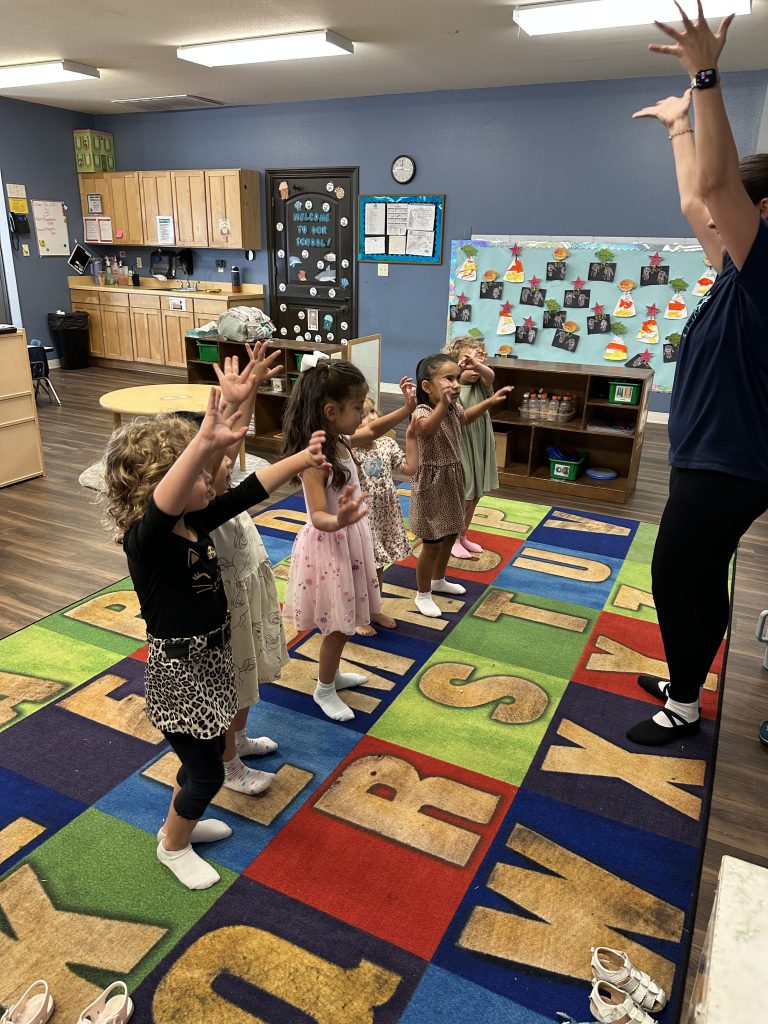
The CDC recommends that kids ages 3 to 5 stay physically active throughout the day for healthy growth and development. But a growing body of research goes further: how kids move matters too. Classes with a trained coach, a plan and games that make kids think while they move do more than burn off energy.
1. Coach-led classes build motor skills faster
A 2024 meta-analysis in Frontiers in Public Health pooled 23 studies of 4,068 children ages 3 to 6. Both structured lessons and free play improved fundamental motor skills, but structured programs did more, especially for locomotor skills like running, hopping and jumping. The longest-running structured programs showed the biggest gains.
What that looks like in class: a Fitness Stars coach turns “hop like a bunny, freeze like a statue” into a warm-up that practices balance, rhythm and body control, every single week.
2. Active games strengthen focus and self-control
Executive functions are the brain skills kids use to pay attention, remember directions and stop and think before acting. A 2024 meta-analysis of 24 randomized trials with 1,426 children ages 3 to 6, published in Mental Health and Physical Activity and summarized by PsyPost, found physical activity had a meaningful positive effect on these skills. Game-based activities worked especially well, and programs longer than 12 weeks did best.
Ever played red light, green light? That’s a self-control workout disguised as a game. Our coaches use games like this in every class.
3. Music and movement help kids get ready for school
In a randomized trial of 213 preschoolers in Australia, published in Developmental Science (2022), kids who did an 8-week rhythm and movement program showed significant gains in teacher-rated self-regulation, inhibition and school readiness, with effects tracked into their first year of school. A 2026 follow-up paper from the same trial also found fewer behavior problems once the children started school.
That’s the same mix of beat, movement and listening you’ll see in our Dance Stars and Music Stars classes.
4. Group play grows social skills
A 2025 meta-analysis in Frontiers in Psychology looked at 14 studies of 1,857 preschoolers and found that physical activities designed around teamwork improved social skills, with a moderate overall effect. Programs that ran about 12 weeks showed the strongest results.
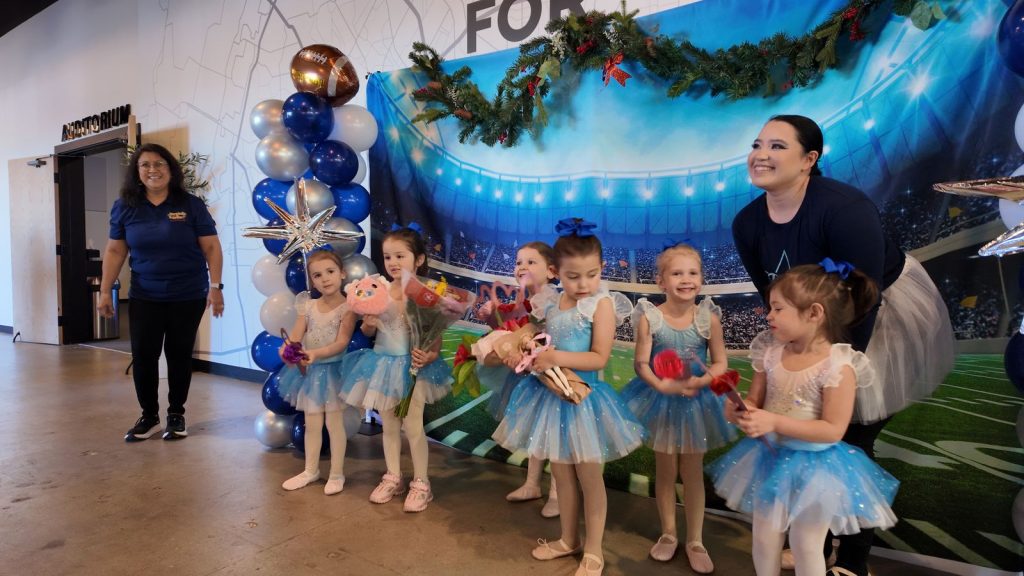
Passing a ball in a circle, cheering a friend through an obstacle course, dancing as a group: these are real social skills practice.
What makes a movement class work? A parent checklist
| What the research points to | What to look for |
|---|---|
| Structured, planned lessons | A trained coach with a curriculum, not just open play time |
| Game-based activities | Games that make kids listen, freeze, take turns and think |
| Consistency over time | A weekly class that runs all season (12+ weeks), not a one-off |
| Music and rhythm | Moving to a beat, following musical cues |
| Group play | Partner and team activities with classmates |
How Stretch-N-Grow helps
Stretch-N-Grow brings weekly, coach-led Fitness Stars, Dance Stars, Music Stars, Yoga Stars and All-Star Sports classes right to your child’s preschool or child-care center during the school day. Every class follows a plan, uses games kids love and runs all season long, so your Star gets the consistent practice the research says matters most. See what a class looks like in Fitness Stars or Dance Stars.
Frequently asked questions
Do preschool fitness classes really make a difference?
Yes. Research reviews of thousands of preschoolers show structured, coach-led movement programs improve motor skills, and game-based activity improves focus and self-control. The biggest gains come from programs that run consistently for 12 weeks or more.
Is free play enough?
Free play is great and kids need lots of it. Studies show structured lessons add more, especially for skills like running and jumping, because a coach gives kids focused practice and feedback.
How often should my child take a movement class?
Consistency matters more than intensity. The studies above saw the best results from programs that ran week after week for about 12 weeks or longer, which is why our classes run all season.
Do music and dance count?
Absolutely. A randomized trial found that a rhythm and movement program improved preschoolers’ self-regulation and school readiness.
Get your Star moving at school
Find your child’s school and enroll in minutes, or try a free Guest Star class first. Directors, book a free demo for your center.
Read next
Sources and further reading
- CDC: Physical Activity Guidelines for Children
- Frontiers in Public Health (2024): Effects of structured and unstructured interventions on fundamental motor skills in preschool children
- PsyPost (2024): Exercise programs improve preschoolers’ cognitive functions
- Developmental Science (2022): Music for preschool cognitive development, RCT
- Behavioral Sciences (2026): A preschool rhythm and movement intervention, RCT
- Frontiers in Psychology (2025): Designed physical activities targeting social skills in preschoolers
This article is for general information and isn’t a substitute for advice from your child’s pediatrician.
views
Recent Posts
See All
If your living room turns into a cartoon marathon the minute the school week ends, you're in good company. Screens...

Updated November 17, 2026 · By the Stretch-N-Grow of Greater San Antonio team Holiday breaks are fun, but late nights,...
Updated November 17, 2026 · By the Stretch-N-Grow of Greater San Antonio team San Antonio winters are mostly mild, which...