
Preschool Enrichment Programs in San Antonio: Fitness, Music, and More
Last updated: November 3, 2026 · By the Stretch-N-Grow of Greater San Antonio team
If you’ve started looking into preschool enrichment programs in San Antonio, you’ve probably noticed how many options there are. Fitness, music, dance, yoga, sports… it’s a lot to sort through when you’re also juggling work, pickups, and the evening crawl down 1604 or 281.
Here’s the good news: you don’t need to sign up for everything. At this age, a few well-chosen activities that get kids moving, singing, and playing with friends can do a lot of good. And when those classes happen right at your child’s preschool or child-care center, you get the benefits without adding another drive to your week.
This guide walks you through what the experts say, which types of enrichment fit young kids best, and what to ask before you enroll.
The quick answer
- The best preschool enrichment programs in San Antonio are play-based, active, and built for little attention spans (short, fun, and hands-on).
- Movement classes (fitness, dance, sports, yoga) help kids practice running, jumping, balancing, and catching.
- Music classes add rhythm, listening, and turn-taking, and songs with actions double as movement.
- Look for trained coaches, small groups, clear communication with parents, and plenty of time left over for free play.
- In-school programs save families travel time, which matters in a city as spread out as San Antonio.
The CDC says children ages 3 to 5 should be physically active throughout the day for healthy growth and development, so enrichment that keeps kids moving is a smart place to start.
What the experts say about enrichment for young kids
The research points in a clear direction: young children learn best through play and movement.
Movement every day. The CDC recommends that preschoolers be active throughout the day and suggests caregivers encourage active play like hopping or riding a tricycle. The federal Physical Activity Guidelines for Americans, from the U.S. Office of Disease Prevention and Health Promotion, set a target of at least 3 hours of active play a day for this age group, at any intensity.
Play builds more than muscles. In an article for the American Academy of Pediatrics’ HealthyChildren.org, pediatrician Michael Yogman, MD, FAAP, explains that play supports planning, organizing, and managing emotions, along with language and social skills. He also notes that tightly structured schedules have squeezed out playtime for many kids, and he encourages families to protect unstructured play.
Songs and movement games train focus. The Harvard Center on the Developing Child recommends activities like songs with actions, freeze dance, obstacle courses, and simple yoga poses for 3- to 5-year-olds. These games help kids practice “executive function” skills, the brain’s toolkit for paying attention, remembering directions, and controlling impulses.
Music belongs in early learning. NAEYC, the national association for early childhood educators, describes music and movement as key parts of excellent early childhood teaching.
Skills first, sports later. Active for Life explains “physical literacy” as having the skills, confidence, and love of movement to stay active for life. It starts with basics like running, hopping, throwing, catching, and jumping, and it favors trying many activities over specializing early.
What types of preschool enrichment programs are in San Antonio?
Most programs fall into a few families. Here’s what each one tends to offer little kids.
Fitness and sports classes
These are high-energy classes built around running, jumping, balancing, and simple ball skills. Good ones feel like a game, not a workout. For preschoolers, the goal is building those basic movement skills and a love of being active, not competition.
Music classes
Music time often means shaking, tapping, and keeping a beat with simple instruments, plus lots of singing. Kids practice listening, waiting their turn, and following along with a group. Action songs sneak in movement, too.
Dance and yoga
Dance helps kids explore balance, coordination, and self-expression. Kids yoga adds stretching, balance poses, and slow breathing. Both give kids practice moving with control, which is a quieter but important skill.
Special events
Field days, camps, and party-style events are a fun way to try something new without a long commitment. They’re great for kids who need to warm up to group activities.
How to choose preschool enrichment programs in San Antonio
Before you enroll, a few simple questions can tell you a lot.
Is it play-based?
Preschoolers learn by doing. Look for classes where kids are moving, singing, and pretending most of the time, with very little sitting and waiting. Short activities that change often fit small attention spans best.
Who leads the class?
Ask whether coaches are trained to work with young children and how they handle kids who are shy, wiggly, or having a tough day. A great coach can make a nervous 3-year-old feel like a superstar.
Does it fit your family’s week?
This is where San Antonio families have a real advantage with in-school programs. If the class happens during the school day at your child’s center, you skip the extra trip across town. That frees up your evenings for dinner, bath, and bedtime, and leaves weekends open for park days and family time.
Will you know what your child is learning?
Ask how the program keeps parents in the loop. Regular updates make it easier to ask your child about class and practice a song or game at home.
Is there still room for free play?
Following the AAP’s advice, keep plenty of unstructured time in your child’s week. One or two enrichment classes are usually plenty for a preschooler. If your child seems tired, cranky, or reluctant, it’s okay to scale back.
Enrichment by age: a quick guide
Every child is different, so use this as a loose guide, not a rulebook.
| Age | What tends to work | Try at home |
|---|---|---|
| 18 months–2 years | Very short, simple activities with lots of repetition; music and movement with a familiar grown-up nearby | Clap and march to a favorite song; roll a ball back and forth |
| 3 years | Action songs, simple group games, obstacle courses; classes that change activities often | Freeze dance in the living room; hop like a bunny, stomp like a dinosaur |
| 4 years | Games with simple rules, beginning ball skills, dance and yoga poses, rhythm instruments | Fast-then-slow dancing; “Simon Says” with stretches |
| 5–6 years | Team-style games, longer routines, trying a few different sports before picking favorites | Backyard relay races; tossing and catching games; making up a dance together |
How Stretch-N-Grow helps
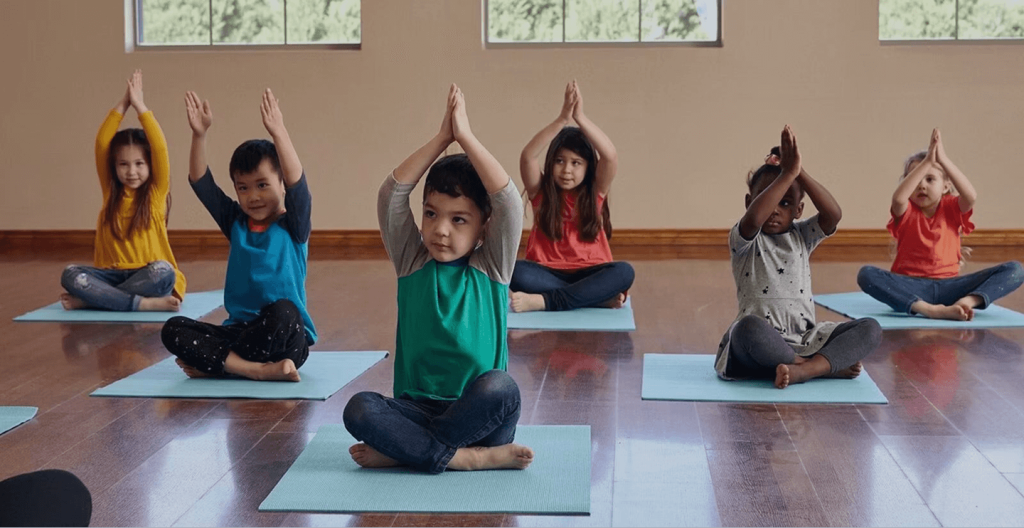
Stretch-N-Grow of Greater San Antonio brings coach-led classes right into local preschools and child-care centers, so kids can take part during their school day. Our programs include Fitness Stars, Dance Stars, Music Stars, Yoga Stars, and All-Star Sports, plus special events like Field Day.
Our Fitness Stars class is a fun, action-packed program where kids work on strength, endurance, flexibility, and balance, and learn how healthy foods fuel their bodies. It’s available for children from 18 months to 6 years old. Parents stay informed through weekly emails and social media, and kids get to build friendships with their classmates along the way.
Want more tips on picking a movement class? Read our guide to kids fitness classes in San Antonio and what parents should look for.
Music and stories go hand in hand, too: try dialogic reading, a simple way to boost your child’s reading skills. And for at-home movement ideas, see 3 exercises your children will actually enjoy.
Frequently asked questions
What age should my child start an enrichment program?
Many preschool enrichment programs start around 18 months to 3 years old. At the younger end, look for short, simple classes with lots of repetition. The best start time is when your child enjoys being with a group and can join in for a few minutes at a time.
How many enrichment classes should a preschooler take?
For most preschoolers, one or two classes a week is plenty. The AAP encourages families to protect unstructured play, so leave lots of free time in the week. Watch your child’s mood and energy, and adjust if they seem worn out.
Are in-school enrichment programs worth it?
For many busy families, yes. In-school classes happen during the day at your child’s preschool or center, so there’s no extra driving and your evenings stay free. Your child also gets to learn alongside classmates they already know.
Which is better for preschoolers, music or fitness classes?
Both can be great, and they overlap more than you might think. Harvard’s Center on the Developing Child points to action songs and freeze dance as ways to build focus, while fitness classes build basic movement skills. Pick the one your child is most excited about, and try the other later.
Ready to get your star moving?
Ask your child’s preschool or child-care center if they offer Stretch-N-Grow classes. If they do, you can enroll through our iClass Pro portal in a few easy steps. New to Stretch-N-Grow? Visit our parents page to learn more, or share our schools page with your center’s director.
Sources and further reading
- CDC: Child Activity: An Overview
- U.S. Office of Disease Prevention and Health Promotion: Top 10 Things to Know About the Second Edition of the Physical Activity Guidelines for Americans
- American Academy of Pediatrics (HealthyChildren.org): The Power of Play: How Fun and Games Help Children Thrive
- Center on the Developing Child at Harvard University: Activities Guide: Enhancing and Practicing Executive Function Skills with Children from Infancy to Adolescence
- NAEYC: Music and Songs
- Active for Life: What Is Physical Literacy? Here’s What You Need to Know
This article is for general information and isn’t a substitute for advice from your child’s pediatrician.
views
Recent Posts
See All
Last updated: October 29, 2026 · By the Stretch-N-Grow of Greater San Antonio team If your little one treats the...

Last updated: November 3, 2026 · By the Stretch-N-Grow of Greater San Antonio team Photo: Yan Krukau on Pexels One...

Last updated: November 3, 2026 · By the Stretch-N-Grow of Greater San Antonio team We know what it's like to...